
Factory worker using application on mobile smartphone to operrat

How to Finance Your Packaging Machine

Packaging EquipmentIf you’re in need of a packaging machine—whether it’s for your new business or you want to upgrade your system to grow business—financing the equipment lease is a viable option because packaging machinery can be a very expensive capital outlay. Packaging machine financing is worth considering, especially when you’re trying to stay within a certain budget for your manufacturing or distribution business or keep as much cash on hand as possible to fund ongoing operations.

There are specific things to keep in mind when you’re making plans to obtain or upgrade packaging machinery, so here are a few tips to help you determine if packaging machine financing is the right choice for you.

No One Understands Your Business or Its Packaging Needs Like You Do

Businesses of all kinds need packaging machinery. From the food and beverage industry to healthcare and pharmaceuticals, this machinery can be key in helping a company stay on the cutting edge and competitive.

Even the difference between two seconds and three seconds in production can be incredibly significant to winning business, and therefore a company’s growth potential. This is why acquiring or upgrading to newer, more advanced packaging machinery can be well worth your investment.

However, state-of-the-art packaging equipment typically requires fairly high up-front costs. This is where packaging machine financing can make an even better piece of equipment attainable and affordable. Packaging machinery costs can be spread out over time, meaning you won’t need to delay upgrades until the time is right. Increasing packaging speed, ensuring correct weights, changing the package material, and more impacts quality and reliability. If you suspect or know that your packaging machine or system is undermining speed and quality, you can’t afford to wait for the right time.

Ask Yourself the Right Questions

Business investments are made with your company’s future in mind. When going through the process of acquiring or upgrading packaging machinery, a few of the questions you’ll need to answer are:

  • How many machines will you need?
  • How often you will be using the machinery?
  • Are your investors willing to pay for machinery? If not, can you afford to buy the machinery?
  • Do you need the machinery for a short-term project or will you need it permanently?

The answers to the above will help you and your leasing partner choose the best leasing solution for your situation. 

Determine if Leasing or Financing is Better for Business

If your company only needs the packaging machinery for a certain period of time, your best bet is probably leasing it. However, if you’re using the packaging machine long-term, you should finance it for the best return on your investment.

Packaging machine financing allows you to have access to the machinery and begin using it to package products (and generate revenue), while freeing up the “extra” money that you would use up if you bought the machinery outright. 

READ: Save Cash When Leasing Equipment

Success is in the Bag

When you take advantage of packaging machine financing, you have more money to invest back in your business. This money can go towards more skilled employees, marketing efforts, consultation, and much more. You’ll have the machinery you need, but you’ll also have more of a budget to fund other business objectives. This will help your company progress and thrive, which will help you compete in your field.

If you’re thinking about packaging machine financing, but have questions, please contact us at Global Financial & Leasing Services. We have expertise in the field of packaging machine financing, and we would love to help you.


restaurant

Using Equipment Lease Financing to Set Up Your Restaurant for Success

finance restaurant equipmentIf you’re opening your own restaurant, you know very well that there are many factors and expenses that go into doing it right—just like any business. And, one of the heaviest financial burdens for those opening a new restaurant is the equipment that your establishment requires.


Restaurant equipment definitely isn’t cheap, but it makes up some of the most necessary items that owners need to run their place. It goes way beyond a simple refrigerator and stove. Also, there are dishwashers, steam tables, ice machines, fryers, bar equipment, prep and work tables, holding cabinets, and much more.

Any one of these items alone can be incredibly expensive—not to mention multiple items, which most restaurant owners need. Because of the reality of high restaurant equipment costs, many owners choose to take advantage of restaurant equipment lease financing.

With restaurant equipment lease financing, you’ll be able to get your hands on the equipment you need to get your restaurant up, running, and successful, even if you don’t have a huge budget to work with from the beginning. Instead of having to pay a large, up-front lump sum, restaurant equipment lease financing allows you to pay a monthly payment instead and keep more of your start-up funds in the bank for other expenses, like:

Quality Employees

You can hire better, experienced employees and pay them an attractive salary to reduce turnover. The better employees there are, the better the customer service will be, which is a big attraction for customers, as no doubt you’ve read on Yelp reviews.

Property Rent

Without the drain of a huge purchase for equipment, you could perhaps afford a better location and have greater confidence you’ll be able to pay your rent on the restaurant space each month.

Better Inventory

Excellent food comes from excellent ingredients, but many quality ingredients are more expensive. Locally-grown, in-season fruits and vegetables, as well as healthier ingredients, simply tend to cost more. With the money that restaurant equipment lease financing allows owners to save, you can afford to invest in better ingredients.

Food Safety

With restaurant equipment lease financing, you can have access to equipment that keeps food at its very best, such as heating cabinets and industry-quality freezers. Keeping food warmed up for pick-up customers or frozen enough to be safe is very important, and if it’s not, inspectors can and will cause trouble for you.

Décor

Ambiance and atmosphere are key to your restaurant’s overall experience. If you’re starting a new restaurant, chances are you have a specific vision for it. The money that financing a restaurant equipment lease saves compared to purchasing outright allows can help bring that vision to life.

Unfortunately, what often stops owners from leasing restaurant equipment is their credit. Restauranteurs with less than perfect credit, typically have a difficult time getting financing from banks. But this is no reason for you to settle for basic equipment, or choose to not open your restaurant at all.

Direct lenders like Global Financial & Leasing Services work with restauranteurs and entrepreneurs who have imperfect credit to get them the tools and equipment they need to kickstart their business. To us, you’re more than just your credit. You could be the next Wolfgang Puck.

If you need help with restaurant equipment lease financing, talk to us at GFLS. We’re here for you, and we want you to be able to achieve your culinary dreams.

industrial-oven

Don’t Finance an Industrial Baking Oven Without Reading This First

At the heart of every great bakery is an even greater oven. This piece of equipment is perhaps the most crucial investment you will make as a bakery owner. After all, every detail of the hard work and preparation you put into your baked goods is going to culminate in the baking process.
It’s also important to select an industrial baking oven that’s going to be dependable for a long time. It needs to provide you with consistency and reliability for years and years to come.

But, choosing the exact right oven for your bakery isn’t as easy as it may seem. When you begin shopping around for an industrial baking oven, you will discover that the options are seemingly endless. With so many on the market, how do you choose?

The first thing to understand is the basic different types of industrial ovens. This will help you determine which one will work best for your needs and meet your business goals.

Basic Types of Industrial Baking Ovens

Convection Oven

This is the most common and popular type of industrial baking oven because it’s the most affordable. A convection oven is the best choice for loaves of bread and individual cakes. This oven uses internal fans to circulate heat so that your batters and doughs bake evenly.

Rack Oven

If the amount of baked goods you produce is a priority, a rack oven may be the right choice for your bakery. If you’re planning to have a large-scale supply of bread or cookies at all times, a rack oven allows multiple goods to be baked at the same time.

Stone Deck Oven

If you’re an artisan baker who uses old-world style baking methods, a stone deck oven may be perfect for your bakery. These ovens provide modern heat distribution with artisan results, and they require less maintenance than a convection oven. They also feature stone decks, which means up to four chambers can be baking different items at once.

Revolution Oven

A revolution oven allows you to bake different types of goods at the same time via revolving trays.

And, that’s just the start! There are all sorts of sub-types of industrial baking ovens as well. The most important thing is to ask yourself questions to rule out what you don’t need—and then you can focus on what you do need.

The right industrial baking oven for you will depend not only on the type of goods you make, but also how many you’ll be producing per day, your personal baking process, the oven’s ease of use and baking speed, your building’s size and codes, and your budget.

If you fall in love with an oven, but find that it’s out of your price range and you can’t seem to get any help from banks for financing or leasing, consider industrial baking oven lease financing from a direct lender like Global Financial & Leasing Services. We work with bakery owners who have less than perfect credit in order to provide them with the equipment they need to run their business successfully.

If you need help with industrial baking oven lease financing, please talk to us at Global Financial & Leasing Services.

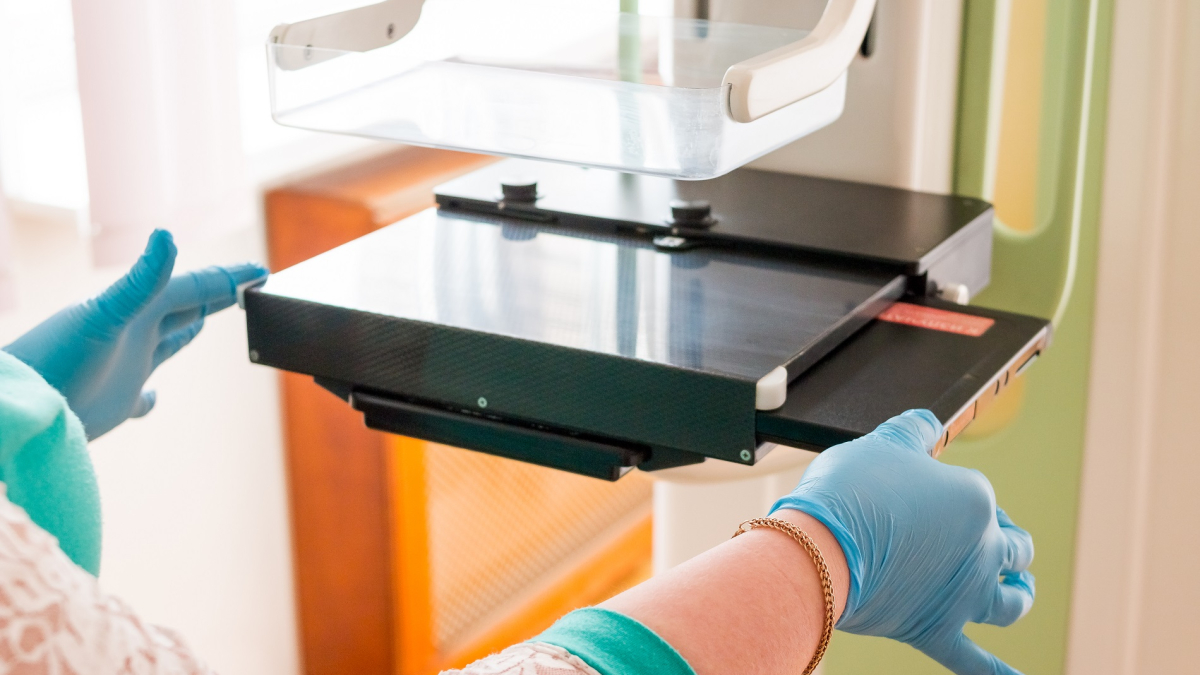
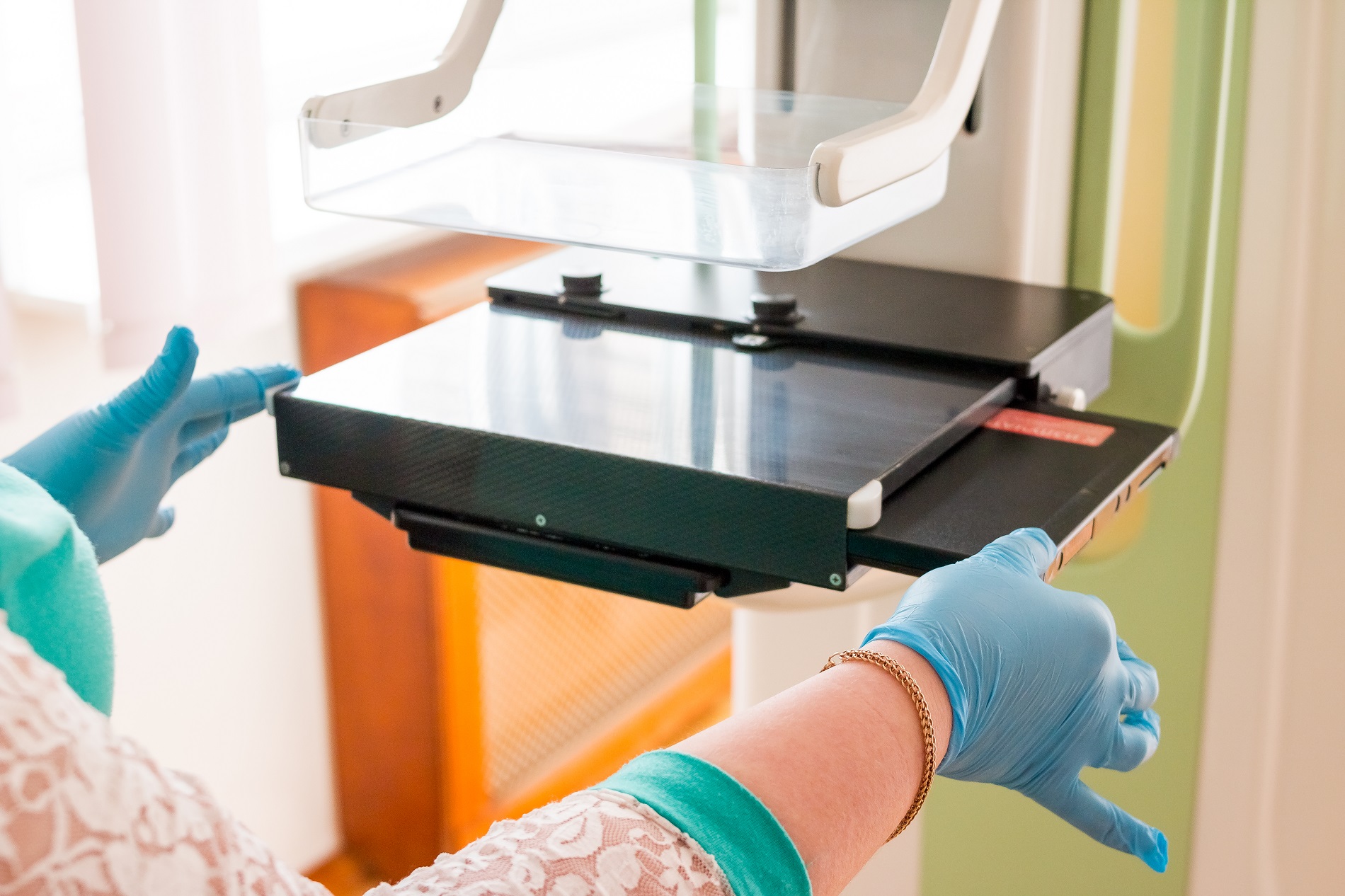
examination of the breast using the mammography x ray machine, which carry out examination of the breast . Prevention of breast cancer.Health care medical technology hi-tech equipment concept. Nurse. medical staff

Medical Imaging Equipment Financing: Leasing vs. Buying

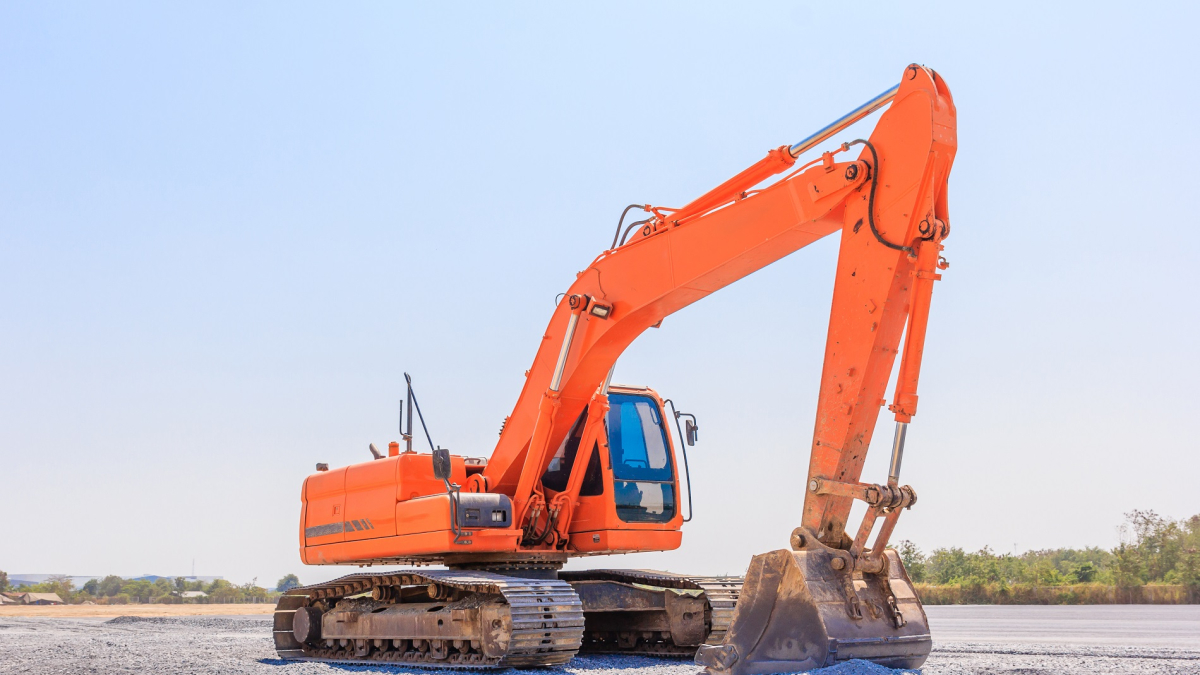
Medical imaging equipment in a clinical settingMedical imaging equipment can be one of a practice’s largest capital investments. Whether it makes more sense to finance, lease or pay cash depends on the equipment, its expected useful life, the practice’s cash flow and how quickly the technology may need to be replaced.


Preserve Working Capital for the Practice

Paying cash for MRI, CT, X-ray, ultrasound or other imaging equipment can reduce funds available for staffing, supplies, buildout, marketing and unexpected operating needs. Financing may spread the acquisition cost over time while allowing the equipment to support patient care and revenue.

Requirements vary by applicant and transaction. The strongest request shows how the proposed payment fits the business and why the equipment is needed.

Plan Around Technology and Useful Life

Medical imaging technology changes, but replacement cycles are not identical for every asset. A well-structured transaction should consider the equipment’s age, condition, expected utilization, service support, resale value and how long the practice expects to use it.

Depending on the program and transaction, available structures may include an equipment finance agreement or a lease. Ownership, end-of-term options and tax treatment vary, so applicants should review the final documents carefully and consult their tax or legal advisers when appropriate.

New and Used Medical Equipment May Be Considered

GFLS can review a range of new and used healthcare assets, including MRI and CT systems, X-ray equipment, ultrasound systems, diagnostic devices and other essential-use medical equipment. Used-equipment requests generally require clear year, make, model, condition, seller and value information.

Explore current medical equipment financing options, including the information that helps a request move efficiently.

What Helps the Review

  • A detailed vendor quote or invoice
  • Equipment year, make, model and condition
  • Recent business bank statements
  • Business financial statements and tax returns when required
  • A clear explanation of how the equipment will be used
  • Installation, delivery and related project costs listed separately

Ready to Discuss the Equipment?

Get a Quick Financing Review or Complete the Full Application.

All financing is subject to credit approval, program availability and final documentation. Rates, terms, advance amounts, deposits, fees and funding timing vary by applicant and transaction.

Doctor check up x-ray film of the brain by ct scan brain at patient room hospital.

Growing Your Practice by Financing a Medical Equipment Lease

Medical EquipmentLike you and your staff advocate for patient care, the Global Financial & Leasing Services (GFLS) team is your advocate in financing leases for medical equipment. We understand that your ability to provide the best patient care hinges on having both standard and state-of-the-art medical equipment. And, like you, we know the high cost of medical equipment can be a barrier to having it in your practice, especially if your credit is less than perfect for whatever reason.
GFLS partners with medical practices of all types, human and animal, to acquire much-needed financing to lease essential medical equipment. In addition to the benefits patients gain by having in-office medical equipment, our clients with medical practices are able to start and/or grow their practices.

Get Your Practice Off the Ground Faster and Easier

Whether you’re taking over a practice or starting one from scratch, working capital can be tight and medical equipment difficult to come by when you’re getting your medical practice off the ground. Your medical practice can gain equity and worth in a short amount of time with the right lease financing.

Financing a lease for medical equipment is easier if you’re a qualified borrower. GFLS works with customers with good credit, as well as those with bad credit. We listen to your “story” and when other financial institutions say no, we can often say yes so you can provide better care faster and get your practice off to the best start.

READ: How to Improve Your Personal Credit Before Financing Business Equipment

Meet Patient Demand for Specific Tests or Services

When you have to refer patients to other practices for essential or elective tests or services, you are turning away revenue. GFLS has financed medical equipment leases that allow doctors to perform tests and services in-office, so you can keep leakage to a minimum and retain control over your patients’ quality of care.

Plus, leasing medical equipment makes it far easier for you to upgrade since you can turn in equipment once the lease is finished and refinance newer models.

Expand or Relocate Your Practice and Keep Capital Outlay in Check

If your goal is to one day expand the number of your locations to meet the needs of popular or underserved areas, chances are you will require medical equipment at the new location(s). One of the most common obstacles is not building a practice in the new location(s), but funding the medical equipment there. GFLS finances medical equipment leases so you have what your practice needs to move into your new location and preserve capital for other aspects of expanding or relocating.

Take Advantage of Section 179 Tax Benefits

Section 179 of the IRS tax code allows businesses to deduct qualifying medical equipment during the tax year it is purchased and put into service, even if it is a financed lease. We recommend consulting with your tax specialist on how to take full advantage of this tax code.

Learn more about the tax advantages of a capital lease and an operating lease.

Providing Not Only Medical Equipment Financing, but Also Valuable Expertise

When it comes to financing medical equipment, GFLS has the expertise that you can trust. We’ve provided financing options in the healthcare market since 2009, which means we can help you navigate the constant changes in both equipment, software and regulations. Get started today with an application or contact our team for more information.

excavator-financing

Excavator Financing with Bad Credit: What to Expect

Updated September 29, 2026.

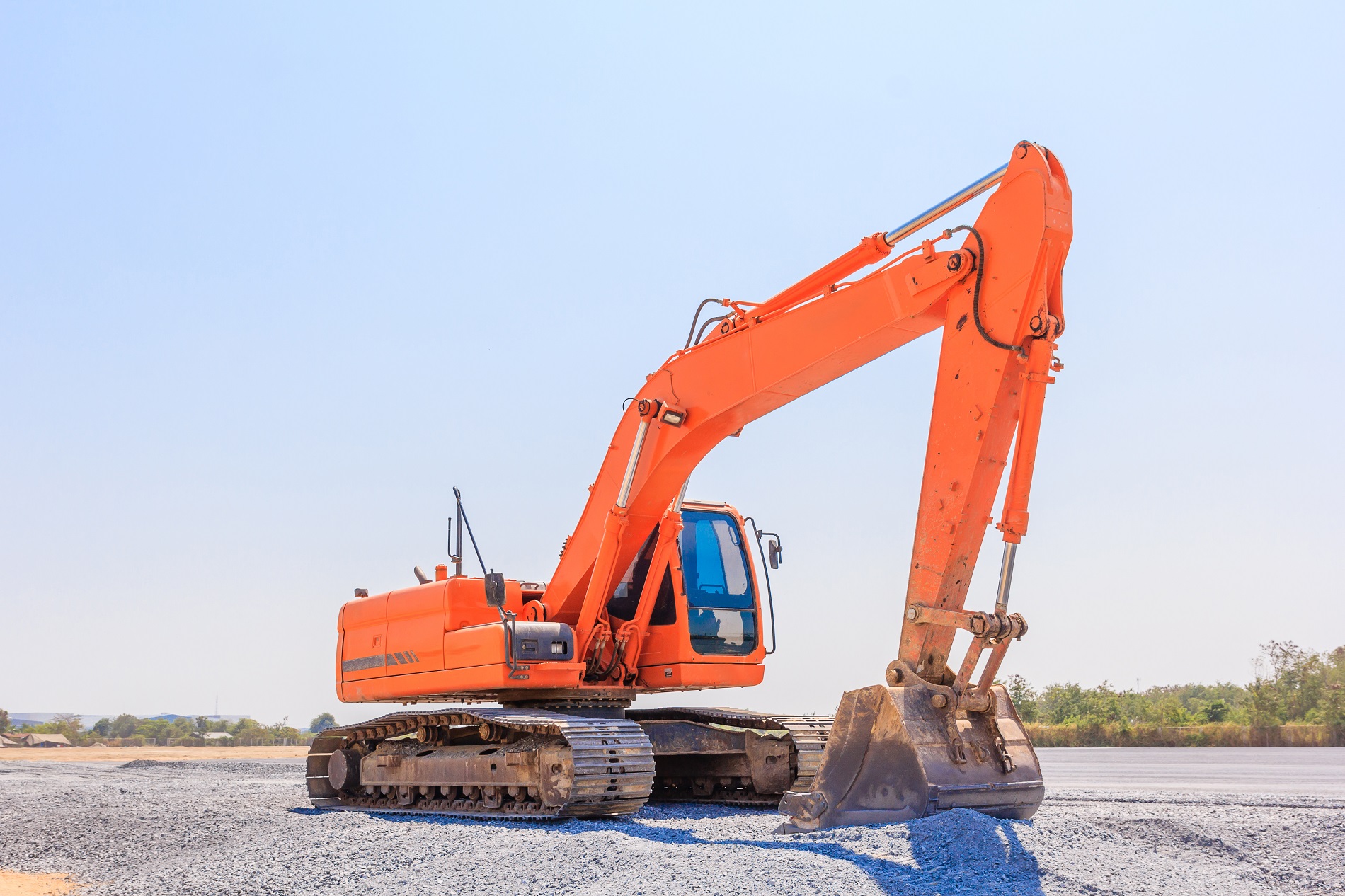
Excavator on a construction jobsiteAn excavator can help a contractor take on larger jobs, replace an unreliable machine or increase capacity. If your credit has a blemish, the financing question is still worth asking. A credit score is one part of the review, alongside the business’s cash flow, the equipment, the seller and the reason for the purchase. Approval and terms depend on the full transaction.


GFLS reviews equipment financing requests for contractors nationwide. Start with the construction equipment financing guide for the broader program, or send a quick financing request with the machine and approximate purchase amount.

What matters when credit is challenged?

Explain what happened, what has changed and how the proposed payment fits the business today. Recent bank activity, existing debt obligations, time in business, project pipeline and ownership experience can help tell the current story. A prior decline elsewhere does not guarantee a GFLS approval, but it does not always end the conversation.

For a contractor adding an excavator to an existing fleet, describe the work it will perform. A purchase tied to a replacement, a signed contract, a capacity need or reduced rental expense is easier to evaluate when the numbers and timeline are clear.

New or used excavator?

Both new and used machines may be considered. For a used excavator, include the year, make, model, hours, condition, attachments, seller information and asking price. Maintenance records and an inspection can be useful when available. The asset’s value and remaining useful life affect how a transaction can be structured.

There is no single reliable price range for every excavator: size, age, hours, condition, attachments and local availability change the purchase price. Use a current dealer quote, listing or purchase agreement rather than an old price estimate.

What should I prepare?

  • A current equipment quote or listing, including any attachments and delivery costs.
  • Recent business bank statements and a concise explanation of the purchase.
  • Business financial statements or tax returns if requested for the transaction.
  • Details about existing equipment debt and the work the excavator will support.
  • A short, factual explanation of any material credit issues and subsequent improvements.

GFLS may ask for more information depending on the applicant, machine, seller and amount. An organized request can reduce back-and-forth, but no specific decision or funding time is guaranteed.

Will I need money down?

The first payment, deposit, advance amount, fees and payment schedule vary with the approval and transaction. Ask for a complete written breakdown before signing. Some qualified transactions may have different structures, so do not assume that every deal has no money down or full financing.

Take the next step

If you have a machine in mind, send the basic details through the two-minute quick request. If you are ready to provide ownership, business and seller details, use the full equipment financing application. GFLS can explain what additional documents the review needs.

All financing is subject to credit approval, program availability and final documentation. Rates, terms, advance amounts, deposits, fees and timing vary by applicant and transaction.

Finance concept

How the Economic Outlook Affects Lease Financing for Construction Equipment

Economic OutlookThe Association of Equipment Manufacturers (AEM) recently published an article on the economic outlook for 2020. It stated that while the economy began 2019 rather strong and that the U.S. is in the middle of 100+ months of economic expansion, many thought leaders are forecasting that our hot economy will cool down a bit. Why pump the brakes in the midst of high business and consumer confidence and low unemployment? Rising interest rates, looming tariffs and an inability to hire enough workers, especially skilled labor.

The Global Financial & Leasing Services (GFLS) team keeps a close eye on economic reports, especially those concerning the industries in which we finance equipment. However, we can gauge the economy’s highs and lows simply by the number of equipment financing applications we receive. Over the past few years, applications have been flooding in from customers who are confident enough in the economy that they’re comfortable spending money.

Construction Leads the Way

The construction industry – residential and commercial – historically leads the way in a good economy. Of course, building requires construction equipment, so it’s no surprise that the demand for construction equipment financing is high.

The past few years were good for leasing pre-owned construction equipment. A good economy mean companies can replace older equipment with new, which increases used inventory. There are a number of construction firms leasing their quality, used construction equipment like backhoes, dump trucks, bulldozers, and other heavy equipment in order to offset the cost of purchasing new equipment.

Is Now the Best Time to Finance Construction Equipment?

Despite interest rates, tariff concerns and labor crunches, it is still a great time to finance construction equipment for a few reasons, including:

  • Used inventory is excellent
  • Current low interest rates (but the Federal Reserve recently has raised rates and more increases could be on the way)
  • The quality manufacturing of today’s construction equipment minimizes the risk of the payments outlasting the equipment

AEM reports that the construction industry is expected to experience steady and solid growth, at least in the short term, though no one can predict the impact of any unforeseen circumstances or events. Financing construction equipment makes sense for many construction firms right now.

READ: Why Put Profit Above an Equipment Lease Payment?

GFLS helps small and medium-sized businesses finance construction equipment leases, even those with less than perfect credit and who have been turned down by other equipment financing providers. Get started today with an application or contact our team for more information.

Woman putting signature on document loan contract, real estate p

What Lenders Want to See in a Business Plan Before Approving Your Equipment Financing Application

Lenders Want Business PlansA solid business plan does many things for a business owner. It provides a clear road map which outlines the future of the business. It sets goals and holds a business owner accountable to them. It explains what the company is, who it serves, and how it works. It is the overall what, why, and how of a company. And perhaps most importantly, a business plan can make the difference between getting gaining crucial funding for equipment leasing or not.


What is the information that goes into a business plan and makes equipment financing lenders become interested in your business? What exactly do they look for, and what convinces them to approve your application?

Here are the seven components of a business plan, and what your potential funders will be looking for when they go through it.

Executive Summary:

This is a brief summary of your business, and should also compact all the important information of your entire business plan into a relatively short overview. It summarizes the highlights of the other sections of your plan, so a good rule of thumb is to write it after you’ve written all the other parts of the plan so that you can add the important ideas from other sections. This is most likely the first thing that your potential lenders will see, so it needs to be exciting, engaging, and informative—but not too lengthy.

Business Description:

This section explains what your business is, and what it does. It should state when the company was founded, where you are located, your mission statement, your business model, the legal structure, and your projected growth. These answers will tell your story and will help equipment financing lenders connect to you, as it will show them how you’re viewing your venture.

Market Analysis:

Your market analysis section is where you take a look at your market as a whole, where you fit within it, and why you stand out against your competitors. Be sure to include information on your target market, your customer personas, and testimonials (if you have them). The market analysis section is also the perfect place to answer the questions that your value proposition asks:

  • What are you solving for your customers?
  • How are you solving it?
  • Who has the problem?
  • Why do your customers care if you solve it?

This section is important to equipment financing lenders as it will teach them about your market and how you will impact it.

Organization Management:

This section is a great opportunity to impress equipment financing lenders. Be sure to spotlight the expertise and qualifications of each member of your team. Equipment financing lenders will be more likely to approve your application if a company has a competent, qualified staff. It’s the ideal place in your business plan to brag.

Sales Strategies:

The sales strategy section is very important for equipment financing lenders. It’s where you explain in detail how you will utilize marketing efforts such as social media, press releases, search engine optimization, web design and development, and more to raise money with your business and make profits a reality. You will describe your price strategy and will also detail the promotional strategies you’re currently using, along with strategies you plan to implement later on. This section shows that you have carefully considered how to using sales to grow revenue and in turn be able to pay your equipment lease payments.

Funding Requirements:

Here’s where you will ask for the amount of money you need from potential equipment financing lenders. In this section, it’s important to be as realistic as possible, and to also include information for a best-case scenario as well as a worst-case scenario.

Financial Projections:

Another very important section for potential investors, the financial projections are where you summarize any successes up to this point and make forward-looking projections. The projections should be based on information about your revenue growth and market trends, and should be created using information about what’s currently happening, combined with your sales strategies. These projections will let potential equipment financing lenders know when they can expect to see timely repayments.

Each section of a business plan is very important to your potential equipment financing lenders. They will be looking through all of them to discover your story, purpose and mission; who your customers are; why you believe you stand out from your competitors and where you see yourself within your industry; what sort of team you have; what your “disaster planning” is; how much funding you need, and give them confidence in your ability to repay.

Teamwork Startup Project Planning making great discussion team M

The Key Elements Every Great Business Plan Includes

Components of a Business PlanFor most business owners, the thought of drafting a business plan sounds like paperwork—something you should do, but just can’t get excited about because you have a business to get off the ground or run.


However, a business plan should be exciting. Why? Because it can be a roadmap that leads you more quickly to the path of success. It allows you to run your company with a complete and cohesive vision, and it is how you will drive the future growth of your business.

How exactly does a document play such a key role in guiding your business? Let’s start with the basics.

Why Have a Business Plan?

Having a business plan sparks action. For one, it forces you to consider all aspects of your company, which means nothing will get overlooked and ignored. When you begin digging into all the information included in a business plan, you’ll uncover factors that demand to be addressed, including your mission statement, value proposition, customer personas, marketing assumptions, operations plan, financial plan, employment plan, and more. A business plan also helps ensure you’ll be prepared for anything because it will point out layout a plan of action to tackle problems before, during and after they occur to avoid serious disruptions and pitfalls.

Are you a goal-driven person? Business owners usually are, and a solid business plan will create and set goals for your business. You can use it to monitor progress, hold you and other stakeholders accountable, and ultimately help control the fate of your business.

When the time comes to secure equipment financing, a well-written business plan is an absolute must. Equipment financing lenders need to see clearly the pathway to your success because they’ll want to evaluate their risk. When the time for financing equipment to further business growth comes, you’ll be glad you have one ready to go versus having to fit developing one into your already busy schedule.

A written record of your company goals—paired with a track record of delivering against those goals—will let equipment financing lenders know that you fully understand your business and industry and will be able to deliver the results that you’re promising. Equipment financing lenders want to know that you’re serious and have thought out and planned your business strategy.

What are the Major Sections of a Business Plan?

Now that you understand why a business plan is crucial, you need to know what to include in the plan. Generally, there are seven components of a strong business plan. These include:

  1. Executive Summary – An overview of your business, which includes the most important ideas from the other sections.
  2. Business Description – An explanation of what your business is and what it does. Location, year founded, and other details should be included.
  3. Market Analysis – A description of your market as a whole, where your business fits within it, and why you feel your company is superior to competitors.
  4. Organization Management – The bios and experience of your impressive leadership and/or management team.
  5. Sales Strategies – An explanation of your current and future marketing plans, and how you plan to generate revenue.
  6. Funding Requirements – A presentation of the amount of money required to fund the business (and essential equipment).
  7. Financial Projections – A summary of your successes up to this point, including forward-looking projections.

Each of these sections are extremely important when writing your business plan. They’ll help you as your business progresses and grows day by day, and they will also come together to form the clear concept and vision that will help secure potential equipment financing lenders, like Global Financing & Leasing Services.

Having a business plan is absolutely necessary for any business. If you haven’t started yours yet, the time to do so is well before your business requires financing for equipment.

Monitor

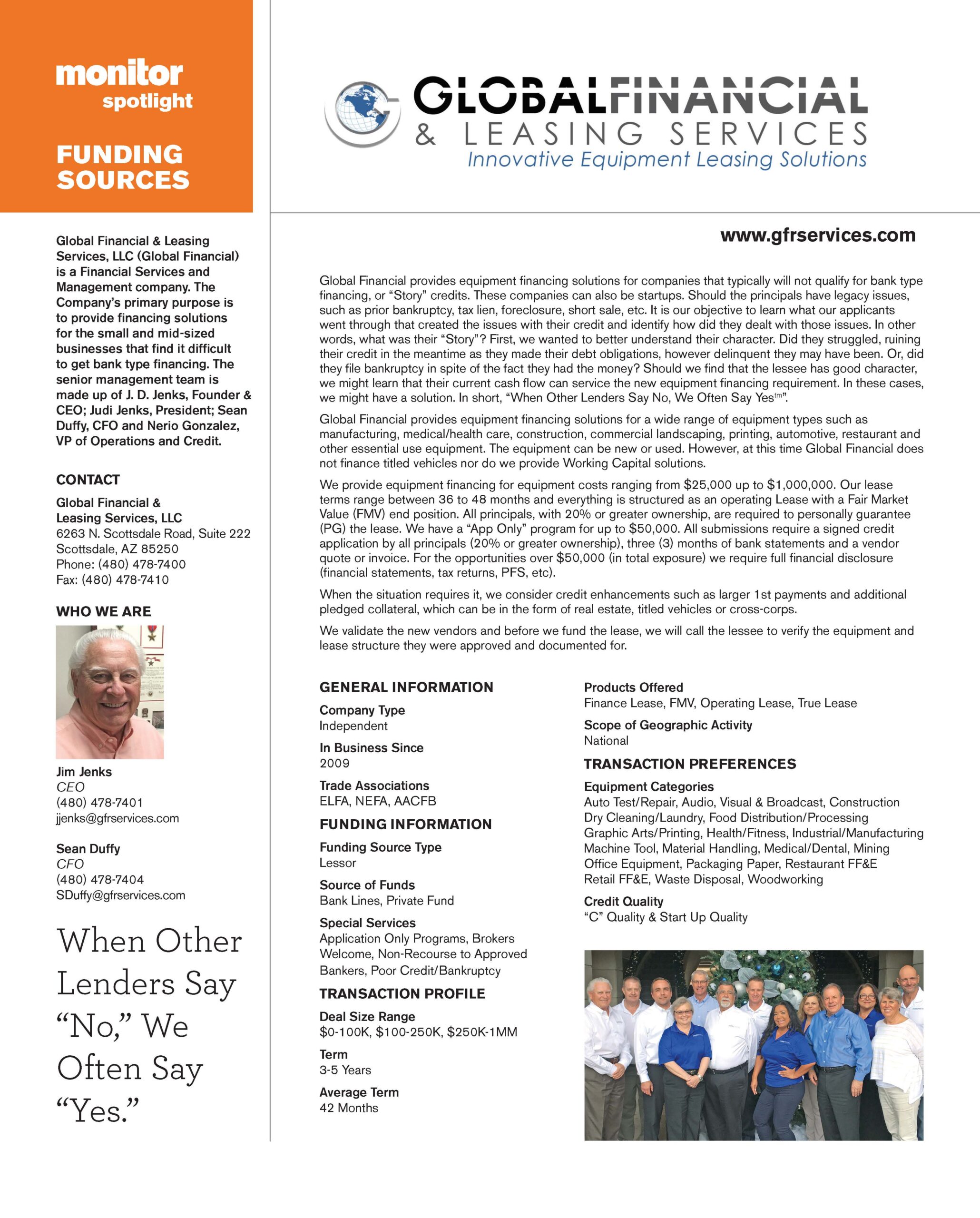
Monitor’s Profile of Global Financial

The Monitor daily, an Independent Voice of Equipment Finance, recently did a spotlight on Global Financial.

Since its launch in 1974, the Monitor has evolved into the leading independent trade publication in the equipment finance and leasing industry. Employing a unique content delivery format, each issue includes timely articles authored by industry specialists and regular features, which are a hallmark of the magazine.

Click to open .pdf version of the profile.


Business Profile Global Financial